

Hair loss is common, and it deserves a diagnosis before it gets a treatment.
The hair and scalp service of Chongqing West District Hospital assesses pattern hair loss in men and women, alopecia areata, shedding conditions, scarring alopecia and scalp disease — with trichoscopy, targeted testing, evidence-based treatment classes and honest timelines, inside a tertiary general hospital.
Most hair loss is progressive and managed rather than reversed. Treatment takes six to twelve months before a response can be judged, and it usually has to be continued to hold the result. We would rather tell you that now than after a year of hoping.
- Evidence-based care
- Diagnosis before treatment
- Honest timelines and expectations
- Medical, procedural & surgical hair care
Hair care that starts with an honest assessment
Hair loss is common, but it is not one condition. Whether it is a receding hairline, a widening parting or sudden diffuse shedding, every plan follows the same three principles.
Assess
Hair loss is diagnosed, not guessed: the pattern and speed of loss, the state of the scalp itself, trichoscopy findings, and only the blood tests or biopsy that the history genuinely justifies. The diagnosis decides everything that follows.
Treat in steps
We follow the evidence for your diagnosis — topical treatment, oral treatment where it is genuinely indicated and properly monitored, and procedural or surgical options only where they can add something medical treatment cannot.
Manage long term
Most hair loss is progressive. We build the follow-up and the maintenance plan that hold the result, because stopping treatment usually means losing the hair it was preserving.
Dedicated specialists within a tertiary hospital
Hair loss is a dermatology problem first and a procedural problem second. Our team joins the medical management of hair and scalp disease with the procedural and surgical skills that can add to it, with the full safety net of a tertiary general hospital behind every plan.

Yongbo Jia, MD (贾勇波)
Dermatology Lead · Deputy Director
Head of dermatology and lead physician of this hair and scalp service: the diagnosis of pattern hair loss in men and women, the assessment of diffuse shedding, trichoscopy and scalp biopsy, and the monitoring that oral treatment requires. Trained at the Institute of Dermatology, Chinese Academy of Medical Sciences.
View profile →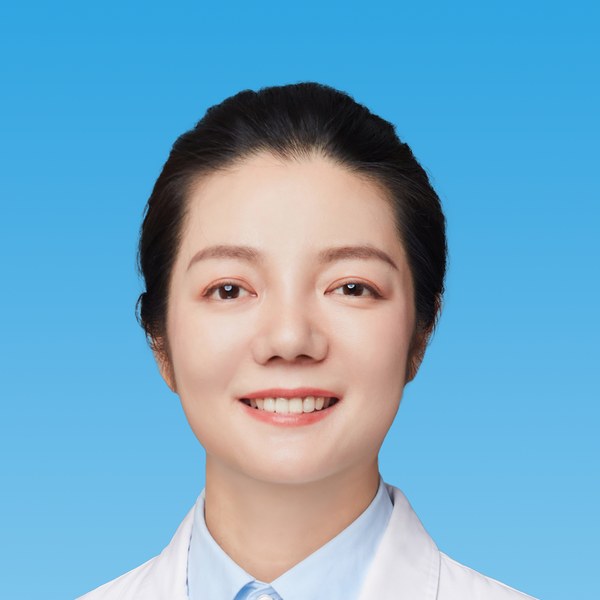
Ke He, MD (何锞)
Skin & Laser Aesthetics · Deputy Director
Head of skin and laser aesthetics; 20+ years on the clinical front line of laser and procedural dermatology, specializing in platelet-rich plasma, microneedling and light-based treatment as adjuncts to medical hair care, and in the management of scalp inflammation.
View profile →
Tongchun Mao, MD (毛彤春)
Aesthetic Surgery · Deputy Director
Deputy Director and head of aesthetic surgery; follicular unit extraction hair transplantation, hairline design and donor-site planning, and refined aesthetic closure across 700+ operations a year.
View profile →
Shaoliang Wang, MD (王韶亮)
Plastic Surgery · Center Director
Center Director; leads the surgical management of scarring alopecia and scalp lesions, transplant revision, and complex wound repair, with 20+ years of tertiary-hospital surgical experience.
View profile →Hair and scalp medicine, explained honestly
Start with the basics: how the hair cycle works, what actually drives hair loss, what treatment genuinely changes, and what living with a progressive condition actually looks like long term.
How Hair Grows and Why It Is Lost
The hair cycle explained, why follicles miniaturise, and the four main categories of hair loss that decide what treatment can actually do.
Read the guide →How a Dermatologist Assesses Hair Loss
History, the pull test, trichoscopy, blood tests and biopsy: how a hair complaint is turned into a diagnosis before any treatment is chosen.
Read the guide →Androgenetic Alopecia in Men
Why male pattern hair loss happens, how it progresses, what treatment classes can hold or partly reverse it, and how long that takes.
Read the guide →Androgenetic Alopecia in Women
Female pattern hair loss, how it differs from the male pattern, when hormone testing is warranted, and what treatment classes can realistically achieve.
Read the guide →Alopecia Areata
An autoimmune attack on the hair follicle: the patchy and total forms, the unpredictable course, and the treatment classes used to settle it.
Read the guide →Telogen Effluvium: Shedding After Illness, Childbirth or Stress
Why diffuse shedding starts two to three months after a trigger, how long it lasts, what to check, and when shedding becomes chronic.
Read the guide →We will not sell you certainty we do not have
No treatment restores hair for everyone. Most hair loss is progressive and managed rather than reversed, and visible response takes six to twelve months rather than weeks. Treatment usually has to be continued indefinitely to hold its result, and stopping it commonly means losing the hair that was regained. Some oral agents carry sexual, mood and metabolic side effects and require monitoring. Transplantation moves existing hair; it does not create new hair, and it does not stop the underlying process. Anyone who tells you otherwise is not giving you honest medical advice.
Ready to find out why your hair is thinning?
Reach out for an assessment. We will examine the scalp, establish the diagnosis, explain what treatment can realistically achieve over the months ahead, and plan the long-term routine with you.
Part of Hair Loss — 4 sites on this topic